
.png)
The observation itself is the easy part. What weighs the cycle down is what comes after it: transcribing, sorting, tagging, retyping into the form. When that work happens while the lesson is still in front of you, the rest of the cycle changes shape.
For leaders of evaluation and coaching programs, there's a quiet math problem in every cycle. The observation itself takes 45 minutes. The categorizing afterward runs hours: transcribing notes, opening the rubric on a second screen, sorting evidence into domains, pasting it into the form. Multiply that across a team of evaluators and a full cycle, and cycles start to slip, logs come in thin, and the dashboard your team relies on shows only what makes it out of someone's evening.
This is the part of the program teachers never see, and it's the part that most quietly weakens the feedback they get.
Principals, APs, and coaches script their walks, observations, and coaching sessions in KickUp, capturing timestamped notes as the lesson unfolds. As notes are typed, the AI identifies whether each line is the teacher or a student speaking, and suggests how each note maps to the framework on the form. Danielson, Get Better Faster, your district's custom rubric: the tags come from whatever framework the form is built around.

The observer reads the suggestions and decides. If the framework tag is right, one click confirms it. If it's wrong, one click removes it. If a note belongs in two categories, both stay. By the end of the session, the running list of notes is already organized as evidence, not raw text waiting to be sorted.
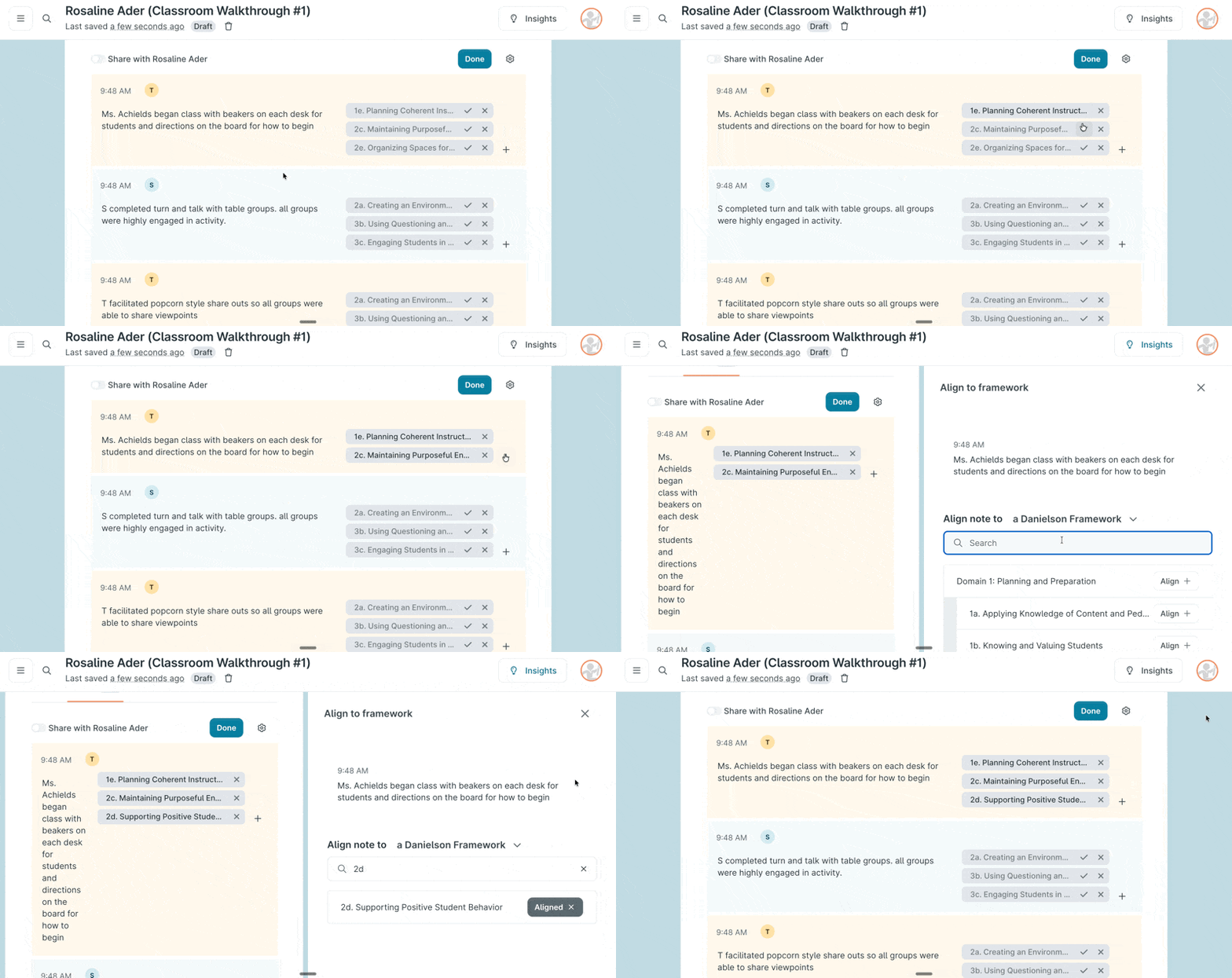
What changes is where the observer's energy goes. As one assistant principal in Lubbock ISD put it: "By the time I'm done doing all that first part, what brainpower is left to do the actual grading?" The tool absorbs the categorizing, which doesn't require professional judgment, so the parts that do aren't being done at midnight.

The payoff isn't really about a single walk. It's that the program runs the way it was designed to.
Observation cycles built around six-hour write-ups don't finish on schedule. Coaching logs that take an evening to translate from notes into a record of the session don't get filled in completely, and the dashboard you ask your team to use is only as good as what gets logged. When categorization takes minutes instead of hours, the documentation happens while the lesson is still fresh. The feedback that lands with the teacher is sharper for it, written from notes the observer hasn't reconstructed from memory at midnight. And the data your principals' and coaches' dashboards depend on actually exists.

It also changes what the AI is for in the eyes of the people doing the work. Stacey Hensley, an assistant principal at Lubbock ISD and one of KickUp’s early scripting users, put it this way:
"Number one, it'll save you time, and that's the one thing we all need more of. The second thing is that AI is a third-party perspective where the emotions are out. It's not judging you for having those biases, and it's not judging the teacher in any way either." — Stacey Hensley, Assistant Principal, Lubbock ISD
That second part is what shows up in the conversations the next morning, when the principal can spend the time on what actually changes practice.
Stacey's full story, including how she went from six-hour evening transcription sessions to evidence organized by the time she leaves the classroom, is here: Read her story →.
Schedule a demo with one of our friendly team members.

.png)