

KickUp Foundations is getting AI-powered insights, notes, and response assistance for coaching and walkthroughs — plus a new way to surface themes across hundreds of open response submissions at once.
Here's what's coming, plus how three districts built walks and coaching practices worth borrowing as you plan for next year.
Every coach and principal knows the gap: you spend 30 minutes in the room with a teacher, capture everything you can, and then spend your evening turning raw notes into documentation, feedback, and follow-through. Details get lost. Feedback goes generic. And a lot of people quietly decide to do it less often than they should.
If that sounds familiar, you're not alone — and what's coming to KickUp Foundations is going to make it significantly easier to build those habits back up.
Coaching conversations are rich in the moment — and most of that richness disappears between the classroom and the coaching log, which can start to feel like pure documentation without value. KickUp is changing that across the whole coaching workflow, not just the documentation at the end.
Before the session, coaches will see a summary of the full history of that coaching relationship — past submissions, recent commitments, focus areas, and cycle goals. The context that used to live in scattered notes or memory is right there when you need it.

Coaches take notes however works for them, and a single click turns those raw notes into a coherent, insight-rich summary. When it's time to fill out the form, suggested responses are ready to insert. They're not auto-filled: coaches review, adjust, and insert what fits. KickUp will never override your professional judgment. The result is documentation that's faster, more complete, and actually reflects the work that happened.
Notes happen in the room, not after it. If your district uses a framework — Get Better Faster, Danielson, homegrown look-fors, or anything in between — KickUp automatically organizes observations by component as they're entered, and tracks whether each note reflects a teacher action, student action, or neither. Walk out of the classroom and you already have a structured, evidence-rich record of the visit — tagged by framework, broken down by who was doing what, summarized into a coherent narrative, and translated into suggested form responses ready to review and insert. What used to take your evening to organize happens in the room, automatically, as you go.
But the bigger shift isn't time. Translating what you see into feedback that actually changes practice is one of the hardest parts of the job — and KickUp is now a partner for that work. The summary, the framework tagging, the suggested responses: they're not just saving steps, they're raising the floor on the specificity and quality of feedback every teacher receives, every visit.
And one of the most common questions principals ask: who hasn't been observed recently? has a direct answer. A staff activity overview surfaces who's been visited, when, and who hasn't, directly in Foundations without exporting anything.

Coaching and walkthrough records are only as good as the process behind them — and that process only happens consistently when it's fast enough and valuable enough that people actually do it. When logging stops feeling like a second job, it happens more often, more completely, and the picture of instructional practice across your schools gets sharper.
And when you're sitting on hundreds of open response answers from coaching logs, walkthroughs, and feedback forms — and never quite have time to read through all of them — KickUp's AI will soon surface emergent themes across all of those responses and generate a narrative summary of what the data is actually saying. No manual review. The patterns are already identified, filterable, and ready to act on.
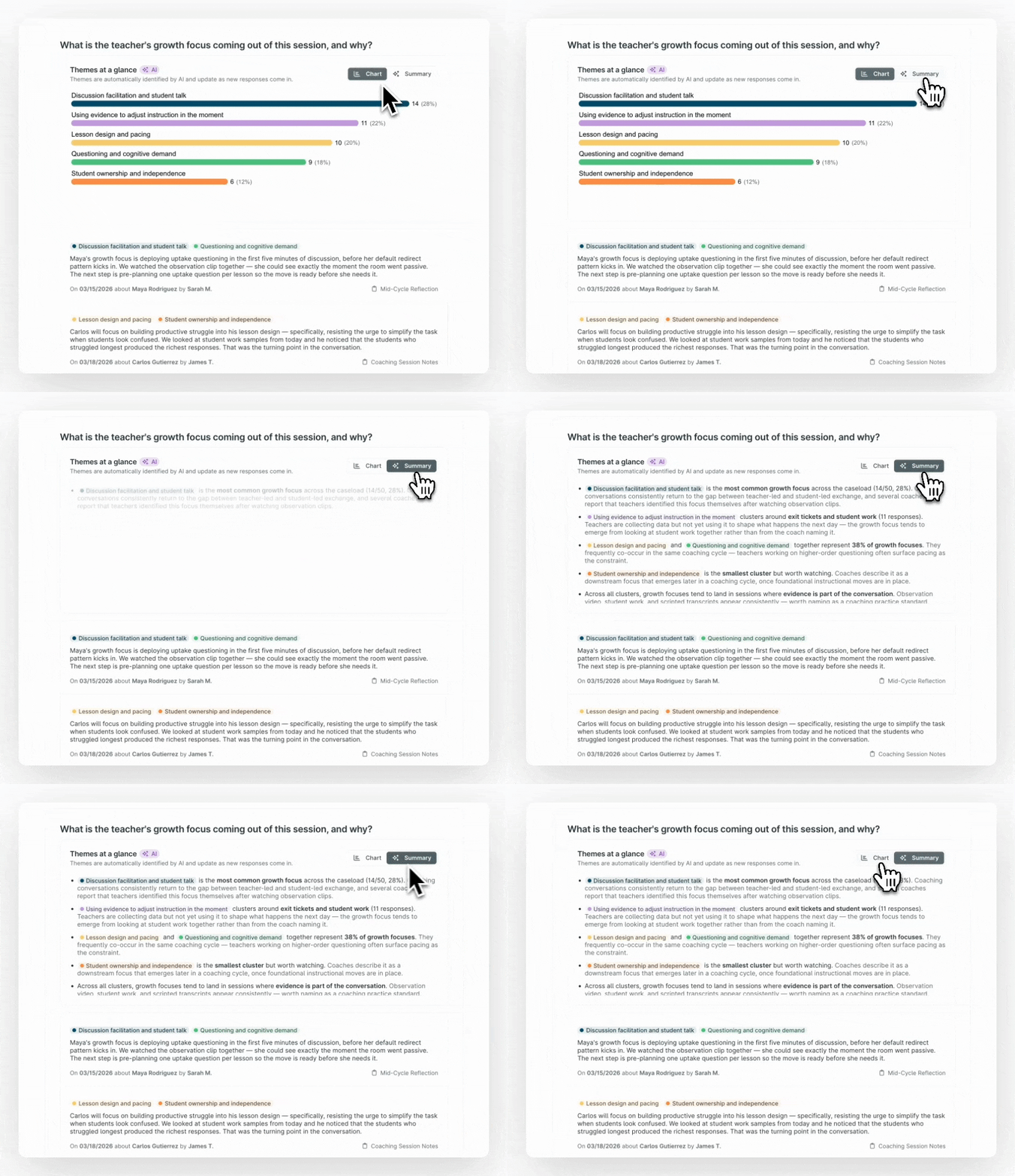
This is what it looks like when the tool works as hard as the people using it. The foundation is already built — and it's getting better.
Whether you're just building out your walks and coaching practice or refining a system that's already running, KickUp Foundations meets you where you are. Here are three districts worth drawing from.
Temple ISD improved accountability ratings on 9 out of 12 campuses in one year. The moves that got them there — focused goals, shared walkthrough data, and monthly accountability rhythms — are ones any district can learn from.
Rockwood School District gave their mentorship program the structure it was missing. Coordinator Abby Smith built a mentorship cycle in KickUp mapped to the emotional arc of a first-year teacher: anticipation, survival, disillusionment, rejuvenation, reflection. And because everything is logged in KickUp, Smith can see in real time who's keeping pace and reach out before a mentor falls behind. Join us April 20 to hear her story.
Newark Central School District unified coaching, walkthroughs, and professional learning— and now leaders can see exactly where support is going and whether it's showing up in classrooms. For instance, they set an 80% implementation goal for differentiated instruction strategies and use KickUp to track progress in real time.
Schedule a demo with one of our friendly team members.

.png)
.png)