
We read through RFPs from districts and state education agencies to find out what districts are asking for in a teacher and staff evaluation system, and built a free buyer’s guide around it.
If you’ve ever tried to find out which evaluations are still in draft three weeks before a deadline, you know how it goes. Part of the answer is in the evaluation system. The rest is in a principal’s spreadsheet and an email thread you’re about to start.
We read evaluation and educator growth RFPs that districts and state education agencies issued between 2024 and 2026 to see what they actually ask vendors for. We turned what came up most into a free buyer’s guide for HR and district leaders. Here’s the short version.
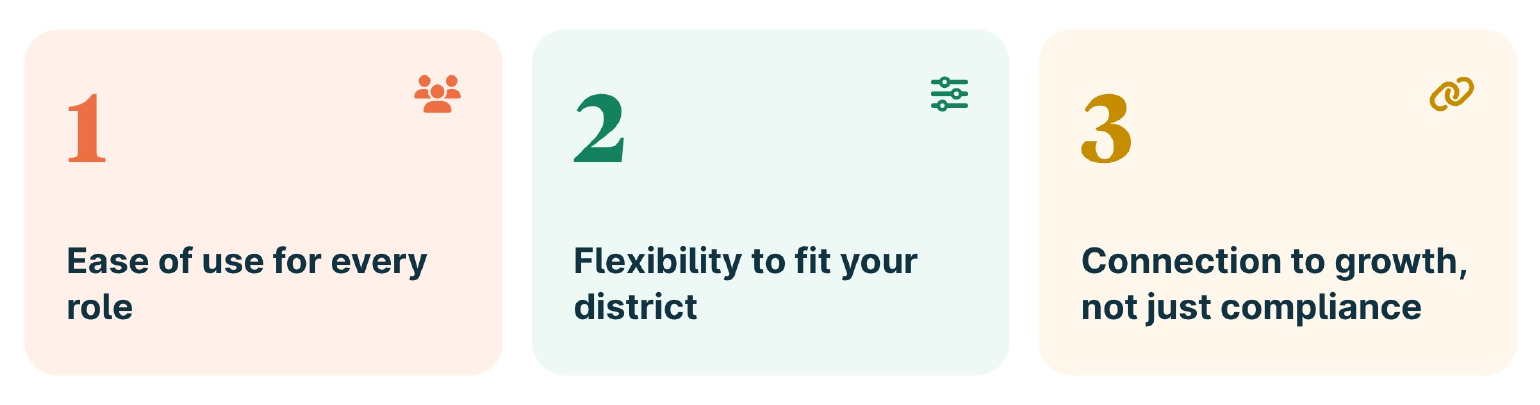
How easy is it for evaluators and staff to use? Principals have to finish the evaluations, staff need to know where they stand, and HR needs to see every cycle without pulling a report by hand. Four questions will get you an answer quickly in any demo:
Ask the vendor to show you each one live, with a real form and a due date. A feature list can’t tell you how many clicks something takes.
How well does it fit the way your district runs evaluations? Teachers, administrators, paraprofessionals, and support staff are often on different timelines, rubrics, and state or union requirements. Check that the system handles your framework and district-specific quirks, whether that’s Danielson, a state rubric like South Carolina’s 4.0 or Texas’s T-TESS, or a custom model. Also check that each role can have its own cycle and that more than one evaluator can work on a single cycle.
What happens to an evaluation after it’s submitted? The districts asking the sharpest questions want evaluations and professional learning tied to the same goals. They also want results they can break out by school, role, evaluator, and rubric domain, so they can compare ratings across evaluators and catch scoring drift.
The guide turns all three into a checklist you can bring to vendor demos, plus a short list of questions for your IT and procurement teams.
Most districts shopping for a new system already know a couple of national names, plus whichever system is common in their state. Here’s where each one comes from and what it was built to do.
The second half of the guide goes back through the same three questions from KickUp’s point of view, so you can check KickUp Growth against your own must-haves one at a time. Yes, we’re a bit biased here, but we share with you several resources and words of wisdom from district leaders who have lived this work.
Schedule a demo with one of our friendly team members.